
Find Who Owns a Fluvanna Parcel
Ownership questions need more than one record. The assessment roll gives an owner of record for county tax purposes. That name is only the start. The Clerk's land index and the newest deed show the recorded transfer, while WebGIS ties an address to the parcel number. Entity names slow things down. When a deed names a company or an estate, search the matching entity or probate record rather than assuming an agent or family member holds title.
- Use the situs address or tax-map number in the Commissioner’s real-estate assessment route to identify the roll owner.
- Compare the parcel number and legal description with Fluvanna WebGIS and the current tax-map reference.
- Search the name as grantee in the Clerk’s land index and inspect the newest deed that describes the parcel.
- If title is held by an LLC, trust, or estate, trace the exact legal name to SCC filings or Clerk probate records as appropriate.
Sources for Fluvanna Owner Names
Fluvanna County keeps its ownership evidence divided among several different offices. The Commissioner's roll entry shows the current picture. The deed index names a recorded grantee. GIS adds location context. Virginia SCC entity filings can explain a business name, registered agent, or principal office, though no filing proves which parcel the entity owns, so compare dates, party roles, and the land description across them.
| Source | Owner Info It Gives | Access |
|---|---|---|
| Commissioner roll | Owner name and tax mailing address where maintained | ACT DataScout link and Commissioner’s office |
| Clerk land index | Grantor, grantee, and recorded land instrument reference | SRA subscription for remote images; courthouse official record |
| Virginia SCC CIS | Entity filings, registered agent, and principal-office history | State business information; not parcel title proof |
| Fluvanna WebGIS | Parcel location, tax-map key, and map context | County viewer and data request routes |
- Owner of record
- The party named in the assessment roll or a recorded instrument.
- Grantee
- The party receiving an interest in a land instrument.
- Situs address
- The physical location of the parcel, distinct from the tax mailing address.
- Title
- The legal interest in property, which requires review of recorded instruments and applicable claims.
An owner of record is not the occupant. The tax mailing address may just be a contact point for bills and notices. Virginians enrolled in the Safe at Home address-confidentiality program may use a substitute address. A public name search is not residence proof.
Limits of a Fluvanna Owner Search
A Fluvanna owner lookup points to a party named in a tax roll or deed. It has real limits. No lookup confirms who lives there, settles an instrument's legal effect, or reveals every private agreement. An LLC's registered agent receives filings, not title. Trustees and executors hold title in a defined role. Protected addresses and sealed court materials may not appear in ordinary public systems.
Lawful use. Use Fluvanna owner information for property research, purchase diligence, or house history. Do not use a name or mailing address to stalk, threaten, expose, or harass anyone.
Fluvanna Assessment Roll Owner Clue
The Commissioner of the Revenue maintains real-estate ownership information. The office also provides an assessment search through a linked service. Results act as a lead rather than proof. When the portal displays the parcel and mailing address, write them down. Note any date or status field as well. Fluvanna publishes no set closing-to-roll update interval.
For a recent sale, the recorded deed is stronger evidence of the transfer. Take the deed's recording reference as your next source. You can also call the Commissioner at 434-591-1940 to ask whether the assessment record reflects the sale. A property owner lookup should not stop at the first name match. The tax roll helps you locate the parcel; the deed records confirm who holds title.
The county's Commissioner of the Revenue page links to the assessment search.
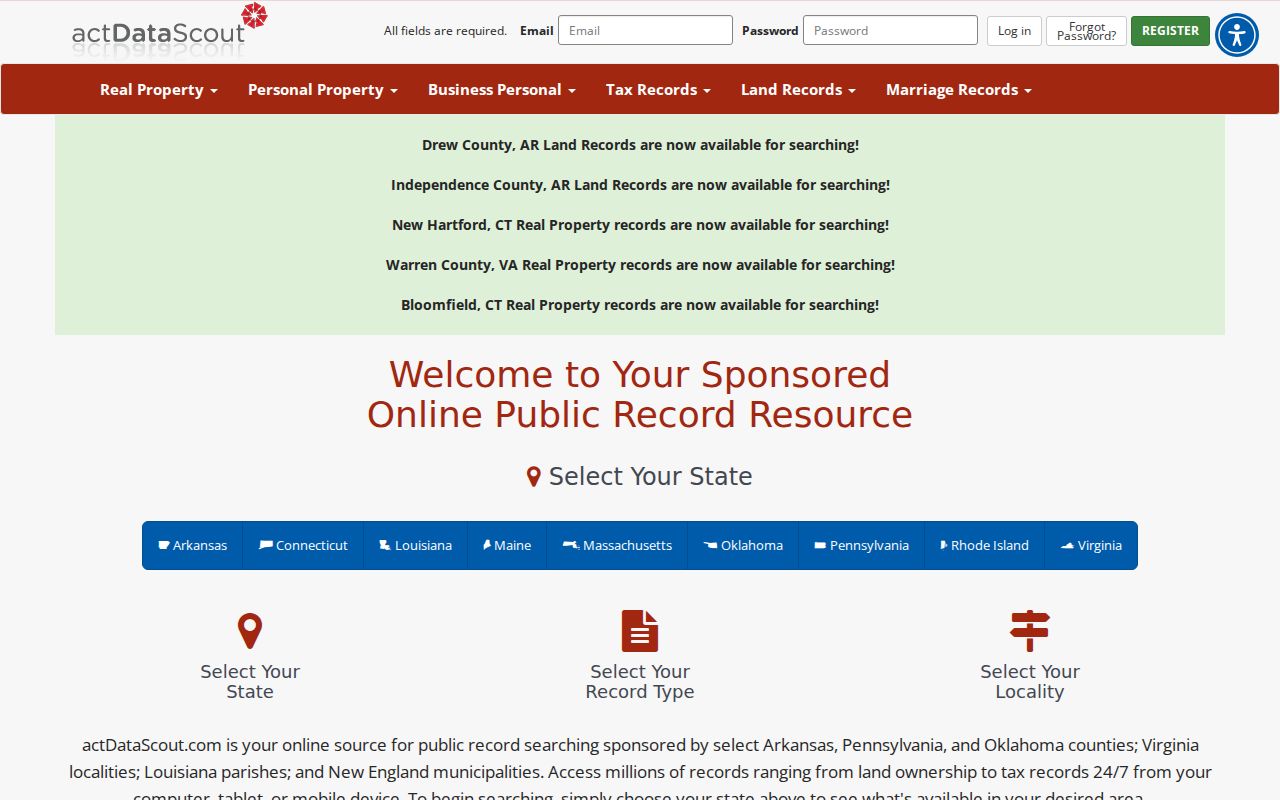
This screenshot shows the portal route, not a verified owner card or sale-history result.
Confirm the Fluvanna Deed
Take the current roll owner and search for that name as grantee in the Clerk's land index. The deed you find should name the acquisition. Check the legal description against the parcel map. Fluvanna's SRA converts land records back to the county's 1777 inception. Remote images need a subscription agreement and advance payment. The online copy is unofficial. The courthouse remains the official source.
Read the instrument type before assuming a transfer. A deed of trust, assignment, easement, or release is not an ownership transfer. The latest deed matters for the present conveyance, while a full title review may reach back through prior deeds, judgments, satisfactions, and plats. The Clerk can explain how to request a copy or locate an index-book reference that resists easy online opening. Start at the Fluvanna Clerk SRA portal and its subscription information.
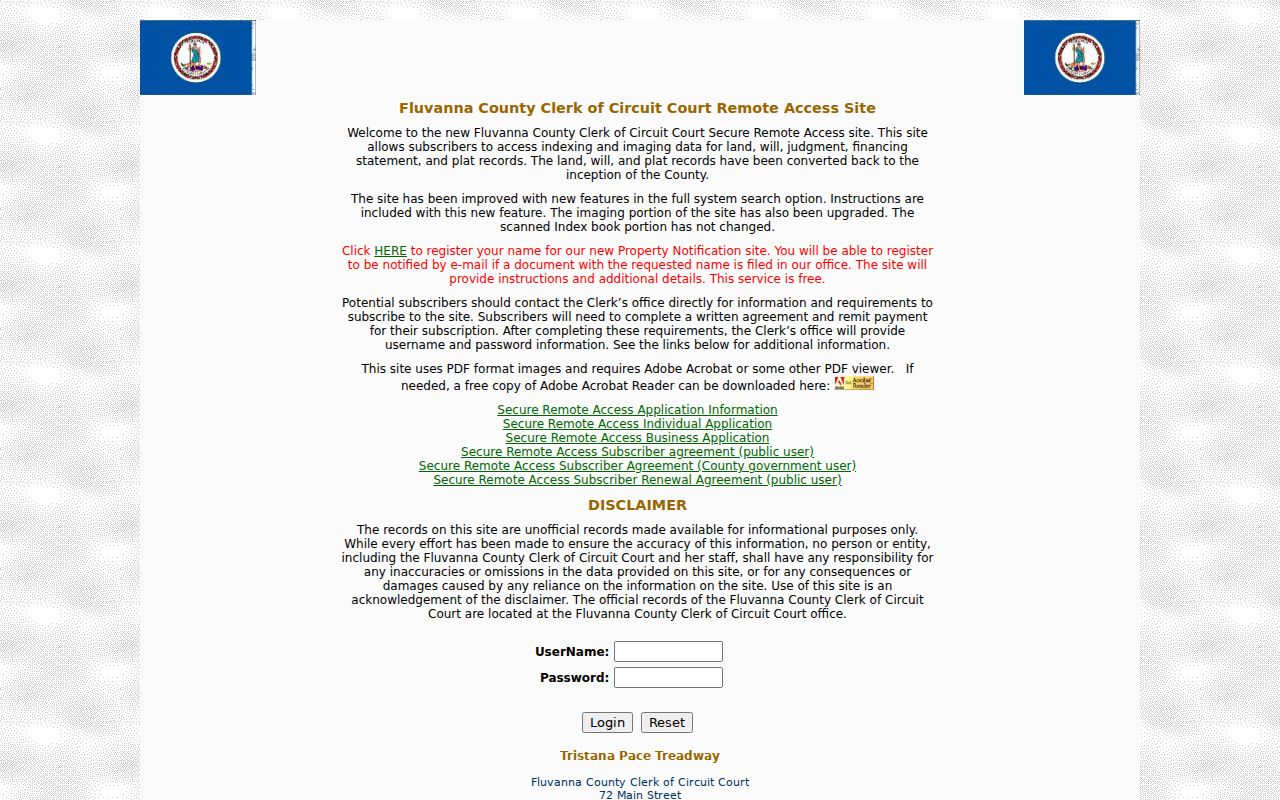
Many document images need a subscriber login. The landing page explains remote access, and the detailed present-owner workflow is on the Fluvanna current owner of record page.
Fluvanna Entity and Estate Names
An LLC on a deed opens a second search. Search that exact legal name in Virginia's SCC system. Business filings can show status, registered agent, principal office, and reported officers or managers. A registered agent receives notices. That role is not ownership. Trusts may surface through a trustee's name, and estates through an executor, administrator, or fiduciary caption. Match these names to the Clerk's instrument and parcel description instead of assuming a person behind the entity owns the land individually.
A will may say who should receive property, but it never replaces the later recorded deed or the court's authority. Wills alone do not transfer land. Fluvanna's Clerk page links wills and estate administration resources. Inspect the fiduciary deed or order and compare its legal description. Restricted vital records serve only eligible applicants. You can search business filings at the official Virginia SCC CIS.
A business filing can tell you an entity's standing. It cannot prove that entity owns a particular Fluvanna parcel.
Use Fluvanna Property Alerts
The Clerk's Secure Remote Access page links a free Property Notification service. It emails a notice whenever a filing appears under a name you select. That makes it a smart follow-up to a property search. A new deed recording or other instrument can be reviewed promptly. It will not block fraud. It also cannot tell you whether an instrument is valid. When an alert fires, go back to the Clerk's recorded document. That matters most when the owner of record does not recognize the filing. Property mail scams often mimic official deed notices. Some offer to sell a copy for a fee. Confirm any sender against the phone number on the county's official page. A private notification tool is not a government office. An unexpected fee request is not proof that a record must be purchased. Signup runs through Virginia Property Notification, which the Clerk links.
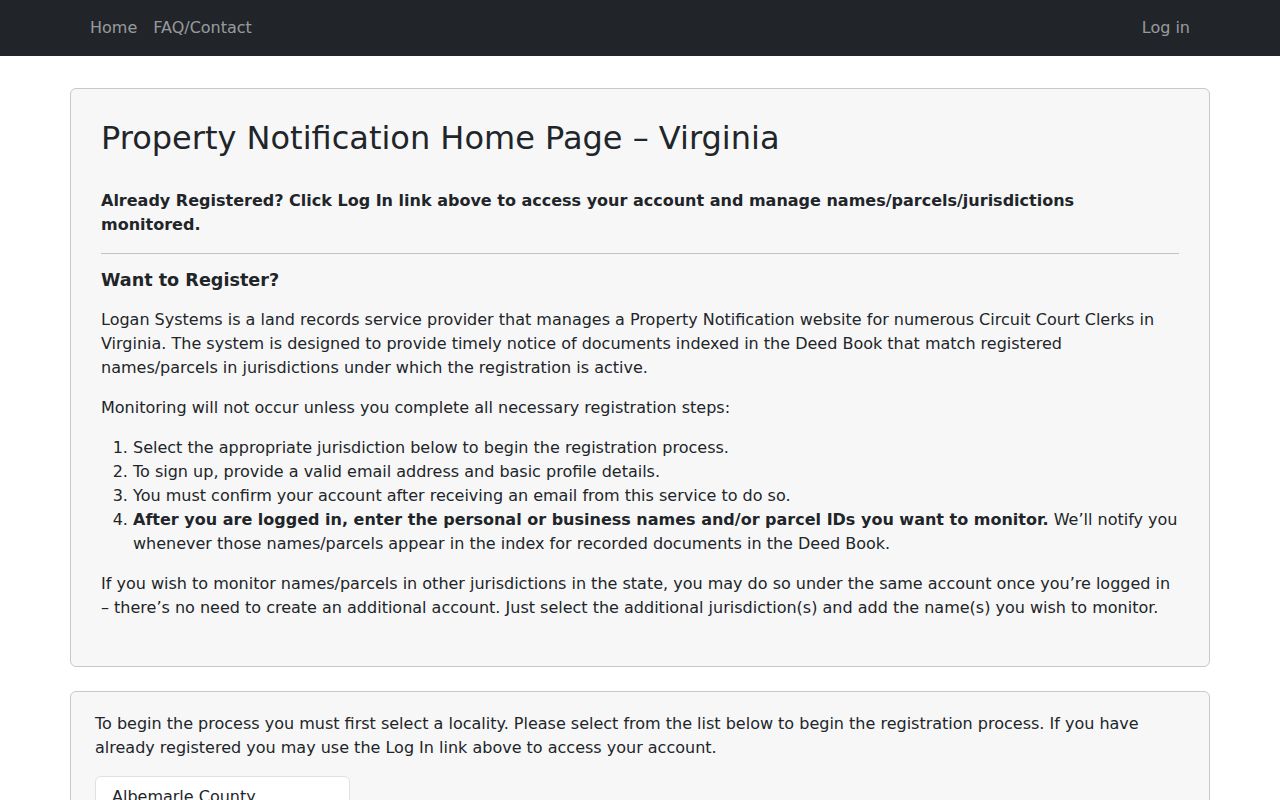
The service alerts only on a name query; contact the Clerk to inspect the instrument behind it.
Fluvanna Mailing Address Privacy
A tax mailing address is a contact clue for the property account. It is not permission to expose or confront anyone. A situs address locates land. It does not identify everyone who lives there. Virginia's Safe at Home program gives eligible participants a substitute address with mail forwarding, so protected people may not appear under an ordinary location search. FOIA access also carries statutory exemptions for protected records. Use county sources for the property matter itself. A title question, purchase diligence, or a tax correction all fit. When a record looks wrong, ask the custodian how to correct the public entry rather than trying to identify a household. For lawful outreach, use the mailing route shown in the official property record and respect any privacy protections that apply. Review Virginia's Address Confidentiality Program for eligibility and scope. Owner of record and occupant are separate facts. A landlord, trust, company, lender, estate, or out-of-county owner may hold the parcel while someone else lives there. The assessment mailing address describes where the tax bill goes. It says nothing about the household. If the question is a recent conveyance, follow the deed date and recording reference through the Clerk rather than inferring a move from a changed mailing address. For a tax or assessment correction, use the Commissioner of the Revenue at 34 Palmyra Way, 434-591-1940; for a recorded instrument or copy, use the Circuit Court Clerk at 72 Main Street, Suite A, 434-591-1970. Each office corrects or explains a different record. A mismatch between the assessment roll and the latest deed can simply be timing, so ask which source is current for the specific record before drawing a conclusion.