
Fluvanna’s Owner of Record
The Commissioner of the Revenue maintains real-estate ownership information. It links that data to ACT DataScout assessments. The live card can vary. So treat the table as a verification checklist rather than a promise of every field. Record only what the current result shows, and note its date. For a recent transfer, the newest recorded deed is the better confirmation. Deed records settle questions the assessment card has not caught up with yet.
| Owner name | Assessment-roll name to compare with the grantee on the latest deed |
|---|---|
| Vesting | Read the deed to determine whether a person, trustee, or entity holds the interest |
| Mailing address | Tax-notice destination, which may differ from the parcel location |
| Situs address | Physical location used to identify the parcel |
| Deed reference | Check the Clerk’s land index for the recorded instrument |
| Recorded date | Use a date only if the current portal or instrument displays it |
The owner of record is simply the party named in the property record. That name is not proof anyone lives there. A mailing address can help with a legitimate property matter. It is not evidence of residence. An address may look protected, or a record may be sealed. Respect that limit. Ask the custodian what can lawfully be released. The recorder or assessor will say what is public and what is not.
Confirm the Current Fluvanna Owner
Start with the tax roll for a name and parcel number. Then compare the newest Clerk record for the same legal description. This matters most after a closing. The county says nothing about how fast the assessment roll updates. A deed's recording date and parties give you the confirmation path. The assessment record may lag behind. If the two records differ, ask the Commissioner about the roll. Ask the Clerk about the recorded instrument. Guessing which data is stale only invites error.
- Open the ACT DataScout link from the Commissioner’s real-estate page and locate the parcel by its known key.
- Write down the owner name and address fields the live result actually displays.
- Search that party in the Clerk’s SRA land index and read the newest deed that describes the same parcel.
- If the deed names an LLC or trustee, check the exact entity or trust role rather than treating an agent as the owner.
- Owner of record
- The name carried by the assessment roll for county property purposes.
- Vesting
- The way the deed names the holder or holders of a land interest.
- Registered agent
- A business filing contact; the role alone does not prove parcel ownership.
Reach a Fluvanna Property Owner Lawfully
The tax mailing address is a contact clue for a property question. It is not permission to confront anyone. Virginia's Safe at Home program gives eligible participants a substitute address with mail forwarding. So protected people may not appear under the property's ordinary address. An owner lookup can support a purchase question, a deed concern, or a boundary request. It should never be used to track where someone lives. Keep the purpose tied to the property itself.
Lawful use. Use public owner records for a legitimate property matter and respect address-confidentiality rules. Do not use the information to stalk, threaten, or harass anyone.
Fluvanna Owner Roll Update Timing
Fluvanna's Commissioner confirms that the office maintains ownership information. But the county publishes no fixed roll-refresh schedule or typical delay after closing. A property search result may therefore sit under a prior name for a while. Do not infer a lag from one parcel. Compare the record date on the newest deed. Then ask the Commissioner at 434-591-1940 whether the assessment entry has been updated.
The ACT DataScout portal provides the assessment entry point, not an authenticated owner card. If the live result shows an update or assessment date, write it down. If it does not, the Clerk's instrument date offers a separate reference point. The general Fluvanna ownership search method explains how the address, roll, and deed fit together. Use the county's Commissioner assessment link to reach ACT DataScout.
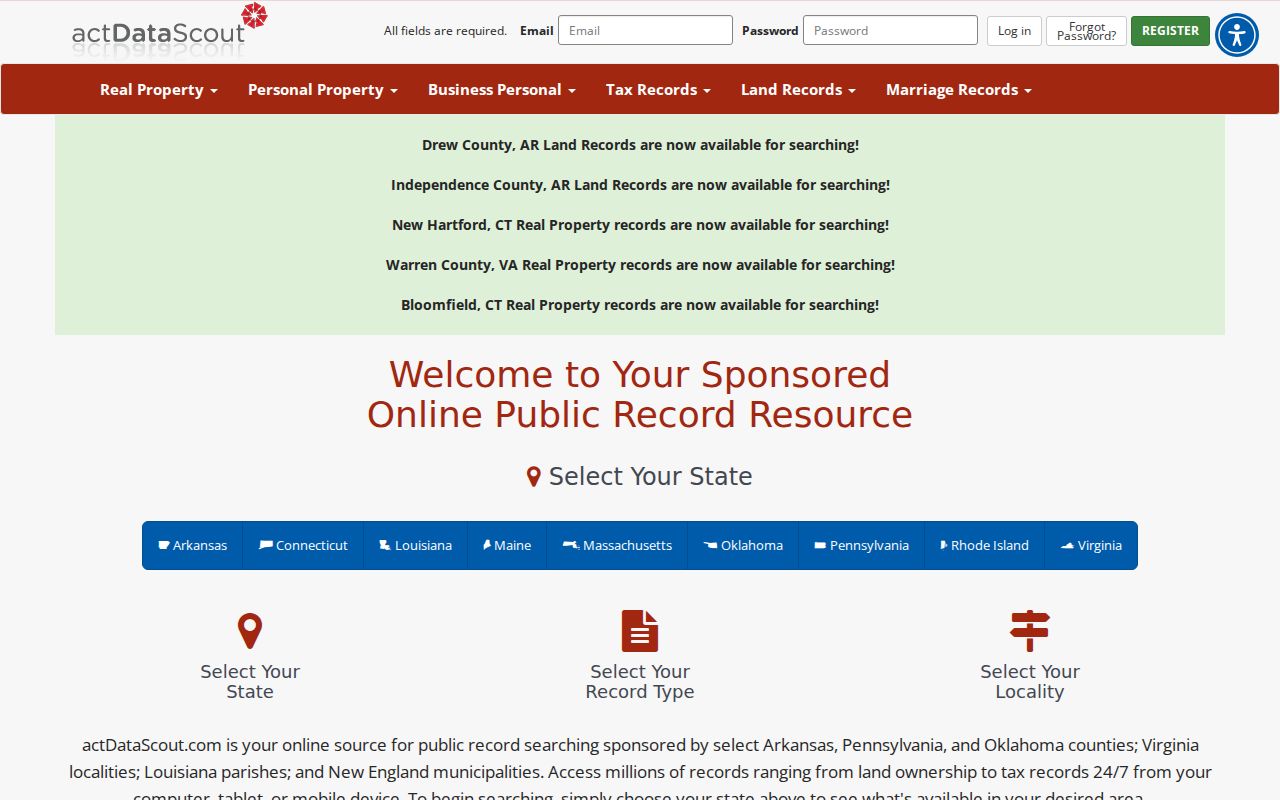
The image shows where to begin a Fluvanna owner lookup, not the current owner result for any single parcel.
Fluvanna Situs and Tax Addresses
An ownership review usually turns up three descriptions. Situs is the physical property location. The mailing address is where the Treasurer sends the tax bill. The legal description is the deed or plat language that identifies the land. These may not share the same community or street label. Palmyra and Lake Monticello are census-designated places. Other community names can appear in postal addresses without creating a separate municipal record system.
Keep all three fields when asking the Commissioner or Clerk about a current owner. A mailing address may belong to an estate, trust, or out-of-county owner. So it does not prove residence. A legal description can identify the parcel. The street address may have changed or normalized differently. Use the exact tax-map number alongside it when comparing the GIS map and assessment results.
Fluvanna Trust and LLC Ownership
A current owner may be listed through a trustee or legal entity. Read the deed's vesting language to see how the holder is named. Then search that same form in the assessment roll. When an LLC owns the property, Virginia SCC filings can show entity status, registered agent, principal office, and other public business details. Those details are context only. A registered agent is not automatically the person holding title.
If the roll uses an estate or fiduciary name, look for the Clerk's probate or land instrument that authorizes the transfer. A will may explain intent. But the deed or court order supplies the recorded property step. When two people share a similar name, compare the legal description, recording date, and party role. Do this before calling them the same current owner. Search the official Virginia SCC business system for entity filing context.
Fluvanna Deed Beats a Stale Roll
A fresh deed can disagree with the assessment roll. When it does, resist merging the two results into one owner of record. First confirm that both entries describe the same parcel. Then confirm the deed is the latest recorded conveyance. The Clerk's SRA reports land records reaching back to 1777. Viewing remote images, though, requires a subscriber agreement and advance payment. The official deed itself stays available through the Clerk's courthouse record path.
For current copy options, call 434-591-1970 or check the county Clerk page. Public service runs 8:00 to 4:30 on weekdays. Recording and fee acceptance stops at 4:00. A difficult search gets easier if you ask the Clerk about book references and scanned index books. The tax roll matters for assessment and billing, but the recorded instrument is what documents the transfer.
Open the Fluvanna Circuit Court Clerk information page.
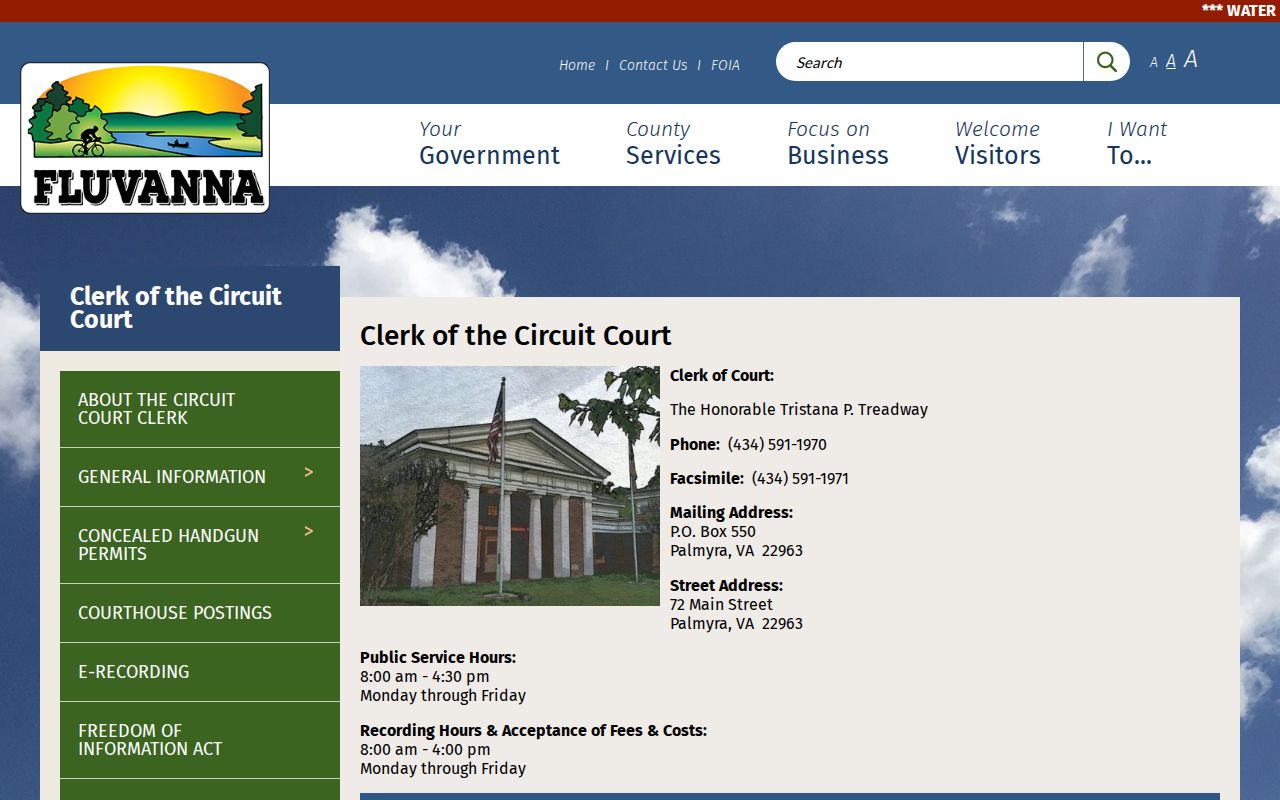
The county contact page routes a deed question straight to the custodian of the official instrument.
Fluvanna Filing Notifications
The Clerk's SRA connects to a free Property Notification service. It sends email alerts when filings appear under a selected name. A current owner can treat it as an early heads-up. The next step is inspecting the actual instrument through the Clerk. An alert never freezes a title record. It also does not verify a filing. Treat it as one monitoring aid. It works best inside a larger review of the latest deed, the current assessment entry, and the parcel description.
Mailed solicitations can mimic an official deed notice. Before paying a private sender for a copy, check the county's own Clerk page. Ask the Clerk what document was recorded and how the official office can provide it. Keep the parcel number and instrument reference together when you follow up.
The service is available at Virginia Property Notification.
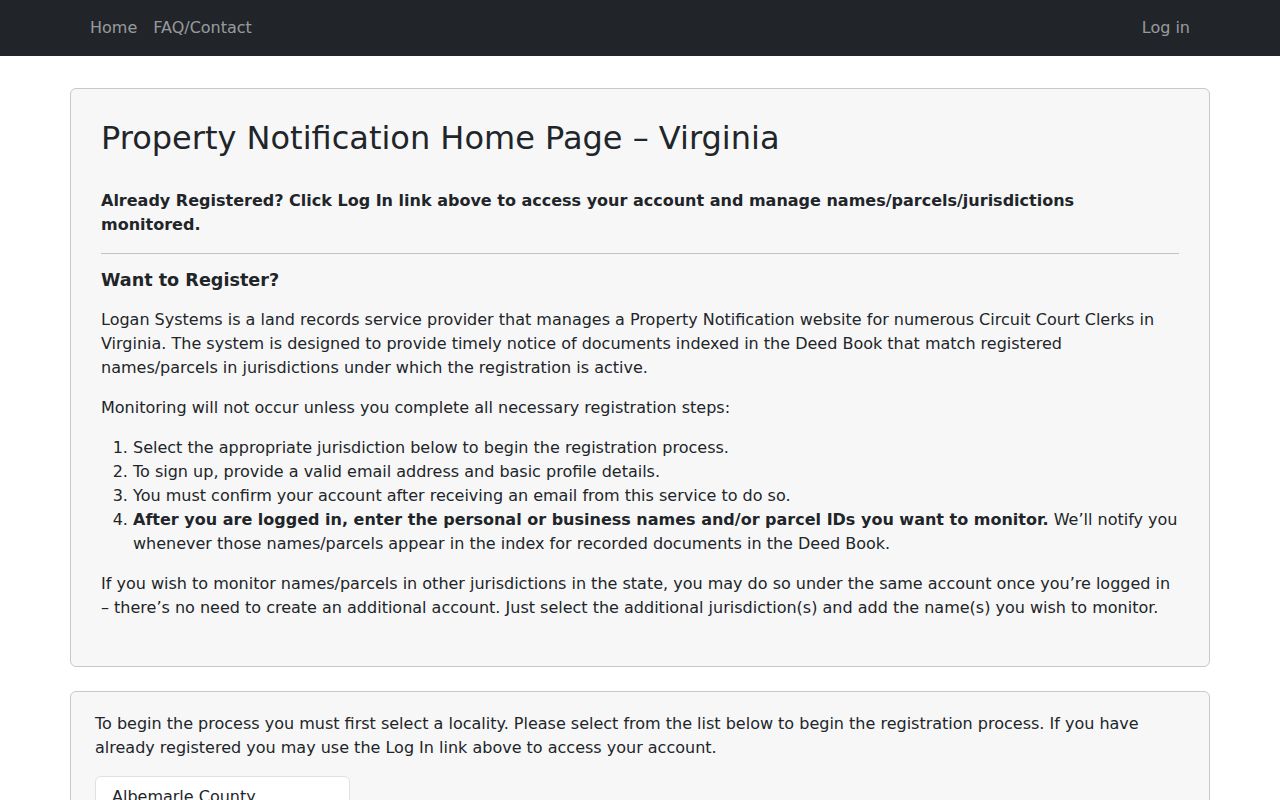
An alert prompts you to review the Clerk's record; it never replaces the record itself.
Confirm Fluvanna Record Differences
Start with the parcel key and legal description when the roll and deed disagree. A split tract may carry more than one current map reference. A community name may also differ from the situs field. Next, compare recording dates and grantee names, watching for entity suffixes or fiduciary titles. Then contact whichever office owns the disputed field. The Commissioner handles the assessment entry. The Clerk handles the instrument and image.
This sequence keeps a current owner lookup focused. It skips tracing every prior owner in the chain. Historical ownership calls for the separate backward-chain records process instead. A boundary or title dispute is never settled by a map screenshot or the current roll. Consult the appropriate land professional for that.