
Fluvanna Deeds and Land Instruments
Deeds and other land instruments in Fluvanna County are recorded by the Circuit Court Clerk. A deed proves a conveyance happened in the public record. It does not guarantee that every lien, claim, or boundary question has surfaced. The SRA record-set description also covers wills, judgments, financing statements, and plats. Treat the categories below as instrument types worth considering during a property search, not as a verified dropdown list inside the subscriber portal.
| Deed Type | What It Does | Common Use |
|---|---|---|
| Deed | Records a stated transfer and legal description | Follow ownership into or out of a parcel |
| Quitclaim deed | Conveys the grantor’s interest without a warranty of title | Family transfer or title cleanup |
| Trustee or fiduciary deed | Shows a transfer by a trustee, executor, or administrator | Trust or estate administration |
| Deed of trust or mortgage | Records a security interest tied to the land | Check a loan instrument and later release |
| Plat or boundary instrument | Records lot, subdivision, or boundary information | Match the legal description to the map |
A deed and a deed of trust do different jobs. The first records a conveyance. The second secures a debt. Match any later certificate of satisfaction or release against the original loan reference. The index may also hold assignments, easements, covenants, judgments, financing statements, mechanic's liens, lis pendens, and releases. But do not trust an index label. Before you conclude anything about an instrument, read the recorded image.
Fluvanna Deed Index by Grantor and Grantee
For remote name-index searches of Fluvanna County land records, the SRA is the route, though its public landing page does not show the subscriber search fields. The recorded workflow still works. Begin with a known party and deed reference, inspect the legal description, and follow the instrument's grantor or grantee back to the prior transfer. Try spelling variants, middle initials, married names, trustees, LLCs, and estate fiduciaries. A same-name match is only a lead. It needs a parcel, date, and legal-description check before it belongs in the chain of title.
- Search the current owner as grantee to locate the acquisition instrument.
- Read the grantor name, deed date, and land description from the document or index reference.
- Search the prior grantor as grantee and compare the description to the same tract.
- Repeat until the required time depth is reached, checking plats when a parcel was split or combined.
- Grantor
- The party named as transferring an interest in an instrument.
- Grantee
- The party named as receiving that interest.
- Chain of title
- The linked sequence of recorded conveyances for a parcel.
- Book and page
- A reference to the volume and page where a Clerk record appears; use the exact reference supplied.
| Public login fields | The SRA landing displays UserName and Password. |
|---|---|
| Subscriber search fields | The research capture did not expose the authenticated form, document-type options, or parcel search controls. |
| Coverage statement | Land, will, and plat records are described as converted back to Fluvanna’s 1777 inception. |
Keep a chain worksheet for each tract instead of a loose list of names. Write down the exact grantor and grantee, the instrument date, the index reference, and the parcel wording. Use the parcel wording as the deed states it. Flag any name that appears in another capacity, such as trustee or executor. When the legal description changes, tie the older tract to the later lot through a recorded plat or boundary instrument. Similar acreage or a familiar road name does not make two parcels identical.
A deed index points to a filed instrument. That instrument may convey only a partial interest. Or it may describe the land differently than a modern tax card does. Read the whole document, including exceptions and referenced plats. Confirm that a release or later deed covers the same interest. The online copy serves research well, while the Clerk keeps the official record and can untangle a difficult volume reference.
Request a Fluvanna Deed Copy
Remote users reach Fluvanna County land images through the Clerk's Secure Remote Access site. The service requires a written subscriber agreement and payment in advance. The Clerk issues the credentials, and images arrive as PDF files. The public page lists no remote subscription price. At the courthouse, the Clerk remains the official-record source. Call before traveling, since weather or holiday changes can shift hours. Public service runs 8:00 to 4:30 on weekdays, but recording and fee acceptance stop at 4:00.
Copy fees come from Virginia Code §17.1-275: $0.50 per page or electronic image, with certification and other services governed by the statute and local schedule. Recording and indexing fees sit on a separate schedule. Instruments up to 10 pages cost $18, instruments of 11 to 30 pages cost $32, and instruments of 31 or more pages cost $52. Oversized plats run $17 per page or sheet. Confirm the current amount, and whether certification is needed, with the Clerk before sending payment.
Recorded, not guaranteed. The Fluvanna deed index shows filings of record, not a title opinion. A title professional checks the broader chain and any issues that require legal review.
Fluvanna Deed Index Since 1777
According to the Clerk, land, will, and plat records reach back to Fluvanna County's inception in 1777. That depth is the online service's stated coverage. It is not a promise that every old volume has a clean digital image or a complete index. The Clerk also notes that the scanned index-book portion has not changed. The remote site has gained newer search and imaging features. A search may dead-end at an index entry. The older book or the courthouse copy may hold the next step.
Tie older entries to the same tract through the legal description and the prior grantor. Historic Fluvanna parcels often rest on metes-and-bounds wording. A later subdivision plat can split the land into lots. Compare the deed book reference with the county tax-map index. But treat the tax map as an orientation aid only. If the online path grows unclear, ask the Clerk. The scanned index book and the official volume may resolve it.
See the Fluvanna SRA land-record entry for the current remote path.
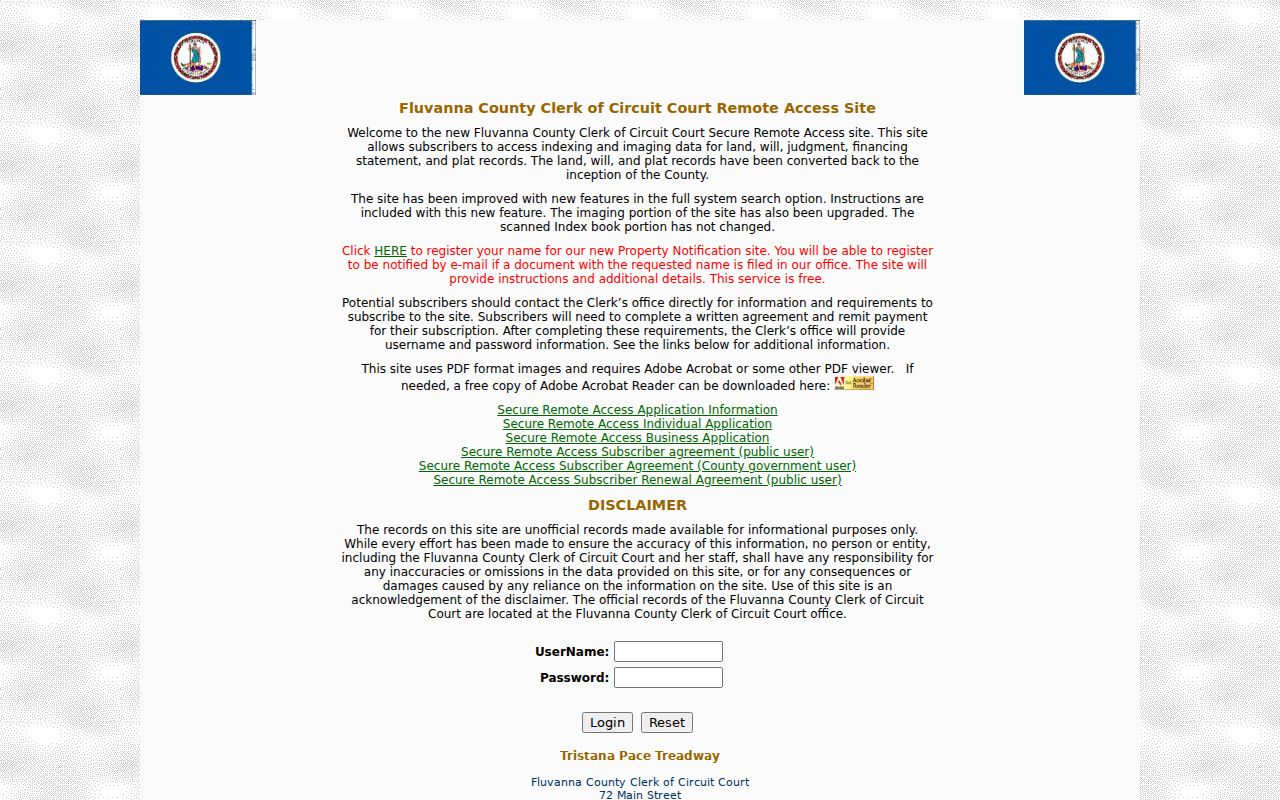
The image shows the login and subscription landing, not the deed index that appears after sign-in. The Virginia courts' statewide remote-access landing is a separate service; check its record scope before treating it as a source for Fluvanna County land instruments.
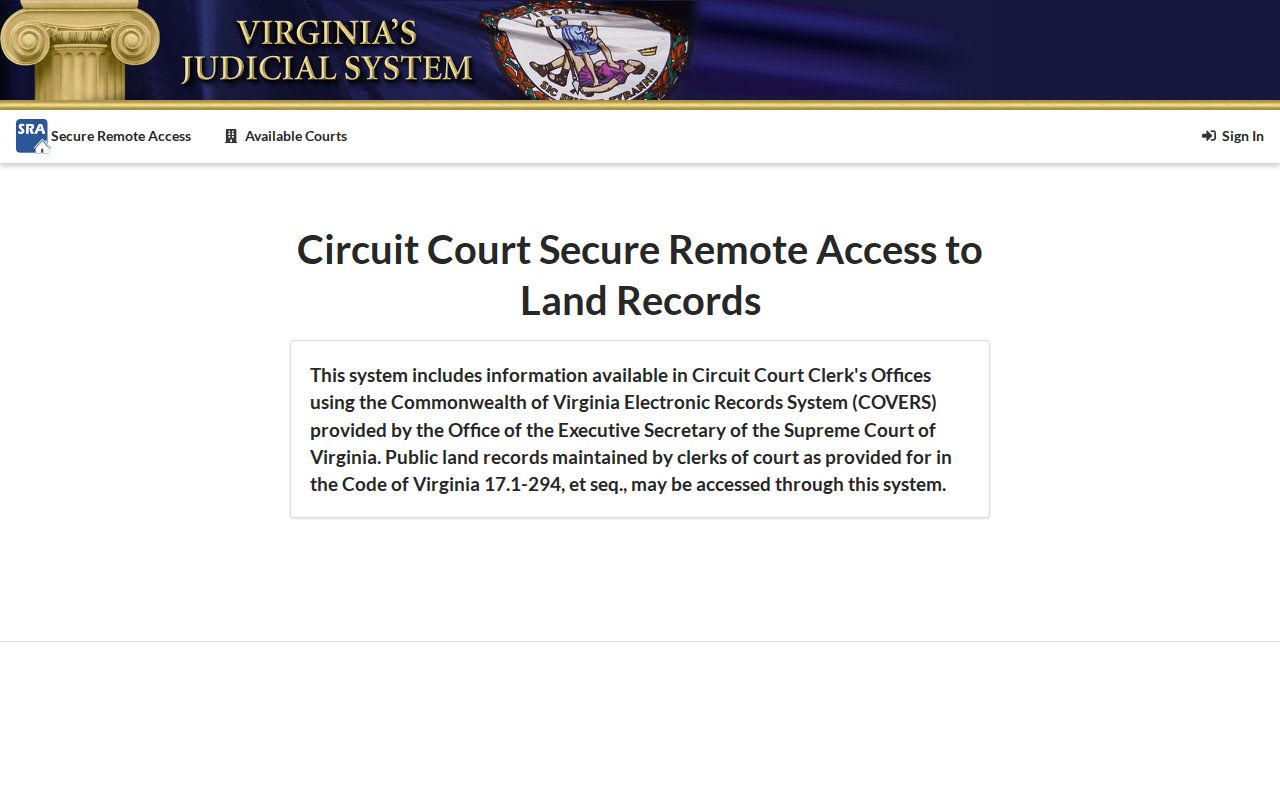
Use the county Clerk's SRA for the Fluvanna land-record access route the county describes.
Fluvanna Deed Images and Copies
Remote access to deed images runs through an SRA subscription. A subscriber signs a written agreement and pays in advance. The Clerk then issues login credentials. The public landing page shows only username and password fields, so the index, not the portal, is where parcel numbers and document types get sorted out. When requesting a specific deed image, keep the party names, deed date, and index reference handy. Those details let the Clerk pinpoint the instrument quickly.
The Fluvanna Circuit Court Clerk sits at 72 Main Street, Suite A, in Palmyra. Mailed items go to PO Box 550. The office serves the public from 8:00 to 4:30, Monday through Friday. Recording stops and fee acceptance ends at 4:00 each day. Weather and holiday schedules can shift access, so call first. The county's Clerk page also outlines services and filing limits, and visitors should check the Circuit Court Clerk's Fluvanna office page before making the trip.
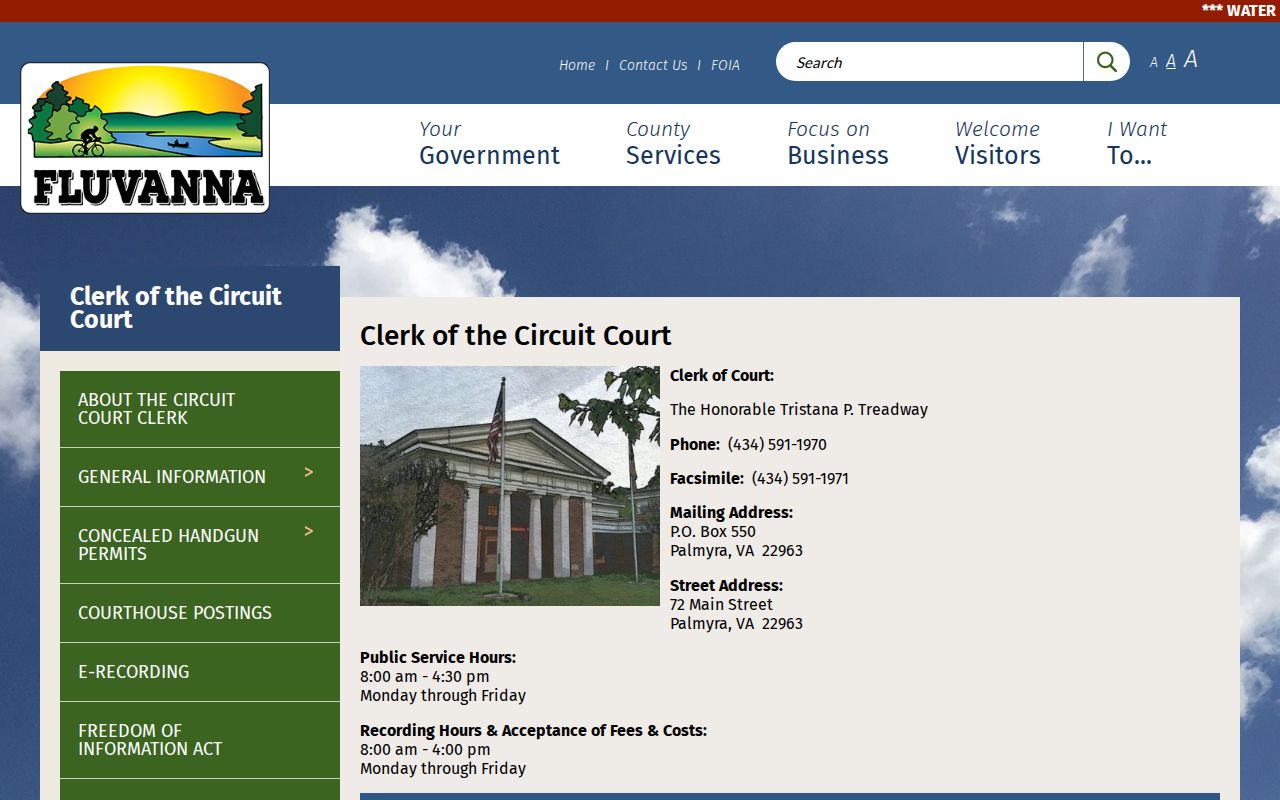
Counter staff can walk you through copy options and fees. Still, the recorded instrument itself is the document to review, since a summary never carries the legal effect of the original deed. Use the official Fluvanna Circuit Court page to confirm current contact and service details.
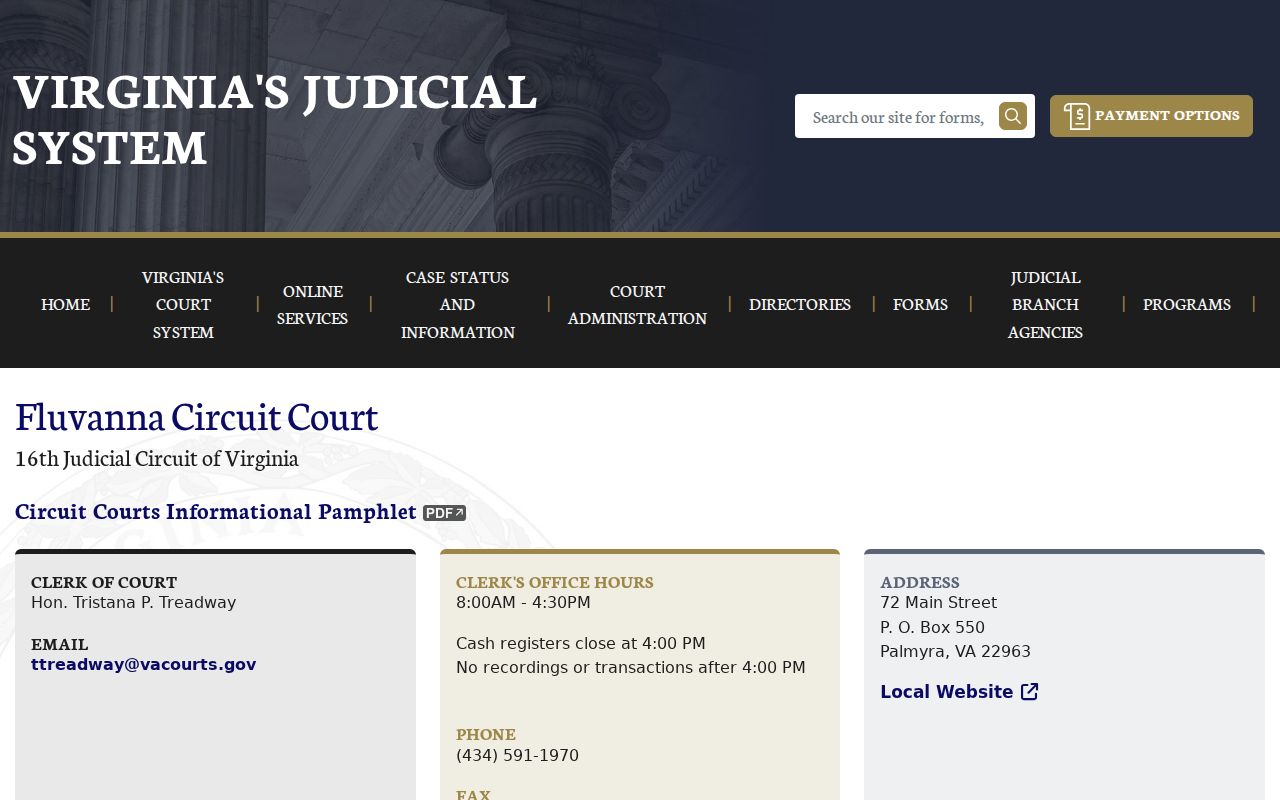
The court page supplies office context for Fluvanna County.
Fluvanna Deed of Trust Releases
A deed of trust or mortgage is a distinct land-record instrument. It differs from a deed that conveys ownership. A lender can assign its interest to another party. A later certificate of satisfaction or release then records the clearing of the security instrument. Match any release to the original document reference rather than trusting a paid statement or a current tax card alone. The SRA also indexes judgments and financing statements. A thorough property search may need those groups too.
Many other recorded items can affect a title review in Fluvanna County. Easements, rights-of-way, restrictive covenants, and boundary agreements all appear in the land records. So do mechanic's liens, judgment liens, tax liens, lis pendens, and subdivision declarations. The portal publishes no fixed dropdown list of these categories. So treat them as a checklist when talking with the Clerk. Then read the deed image itself, along with any linked release or court order. This is where a professional title search earns its fee, because an index result alone says nothing about priority or legal effect.
Fluvanna Estate Deed Transfers
When land passes at death, the property records can involve several instruments. A will may play a part. So may a probate file, an executor or administrator deed, a commissioner's deed, or a court order. A survivorship conveyance or a later fiduciary deed can also appear. A will itself is not a deed. Search the person's name in both the will and land indexes. Then verify which recorded instrument actually changed the land interest. Confirm its legal description matches the current parcel.
Fluvanna's SRA covers wills and land records back to its stated inception period. Some court or personal material stays sealed or protected. Marriage and divorce records can explain a name change. They can also explain a gap in the title chain. Current Virginia certificates remain restricted until the statutory period passes, though. For older material, the Library of Virginia catalog is the state archival route. Local collection year-runs vary.
The deeper backward chain has its own workflow on the Fluvanna former-owner records page.
Fluvanna Deed Fraud Alerts
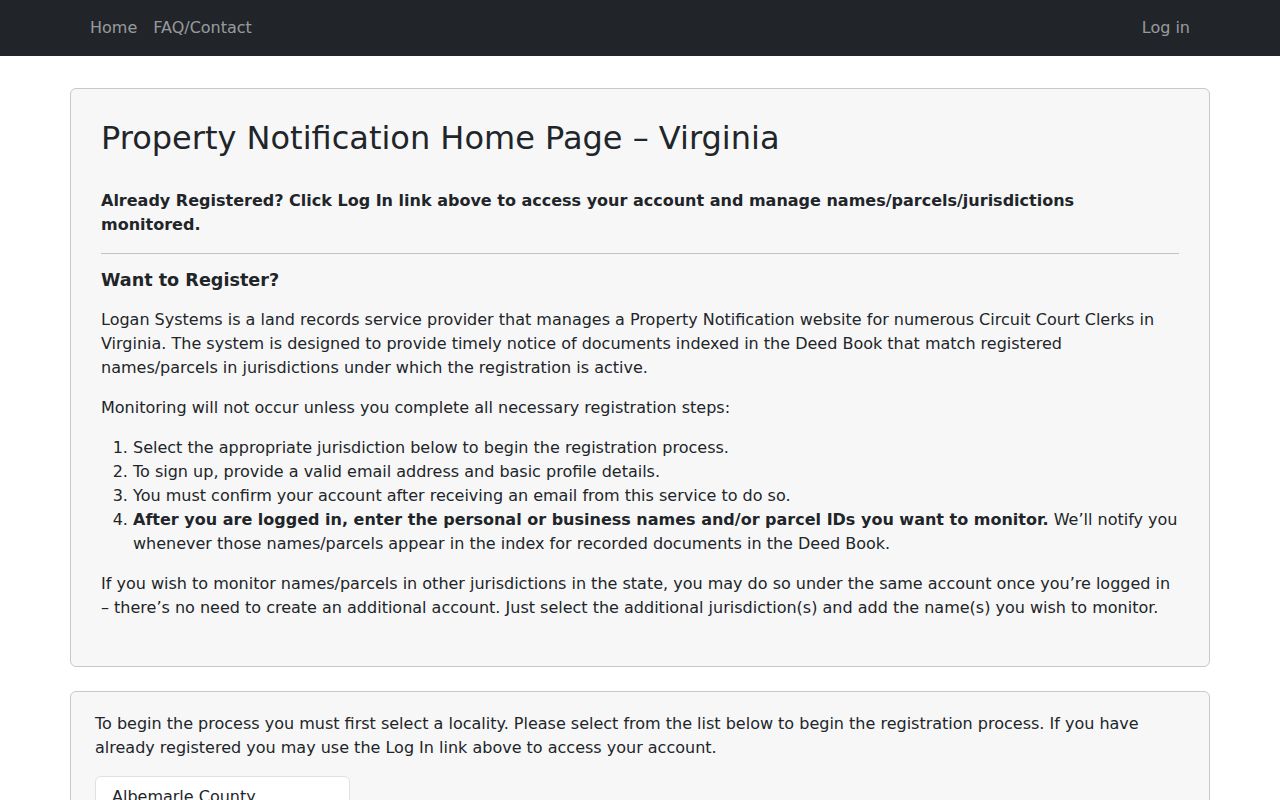
The Clerk's SRA connects to a free name-based Property Notification service. It emails a notice when a filing appears under a selected name. That gives an owner of record a prompt reason to inspect any new document. It is an alert only. It is not a fraud block. It is not a title opinion or proof that a filing is valid. Contact the Clerk about any unfamiliar instrument and ask how to obtain the official record.
Paid mailers dressed up as official deed notices are a known scam pattern. They circulate in records circles. Verify the sender with a phone number from the county's official page. Any tax-sale solicitation should also match the Treasurer's current instructions and its named TACS contact. If a notice looks deceptive, save the envelope, sender, number, website, and payment demand. Signup runs through Virginia Property Notification, linked from the Clerk's site.
A filing alert is only the start of a review in Fluvanna County. The Clerk's recorded instrument remains the authoritative source.