
Fluvanna Property Value Types
A Fluvanna property value can mean several different numbers. The assessment is the county's figure for taxation. Market value is a sale-oriented concept instead. A recorded sale price is the amount shown in a past deed or a related record. The county's ACT DataScout card may not display sale history or a market-value field. Note the date on whatever figure appears.
| Value | What It Is | Where |
|---|---|---|
| Assessed value | County valuation used for real-estate taxation | Commissioner of the Revenue assessment record |
| Market value | A sale-oriented estimate; not verified as a displayed ACT field | Independent appraisal or other market analysis |
| Last sale price | Consideration for a past transfer when recorded or shown | Recorded deed; live display not confirmed |
| Land and improvements | Possible components to check if shown on the live assessment card | Commissioner’s assessment portal; sample card unavailable |
Fluvanna's 2025 reassessment procurement calls for assessments at 100% of fair market value under Virginia law. Even so, an assessment is a tax figure. It captures one point in time. A recorded transaction is historical as well. Neither number promises what the parcel would bring today; a licensed appraiser weighs condition and market evidence for that.
Look Up a Fluvanna Assessment
The Commissioner's county page links ACT DataScout for real-estate assessment lookup. Start with an address or a parcel key. Confirm the legal description matches. Card layouts vary between releases. Trust only the fields the portal actually displays rather than assuming sale history or an assessment-year label. Call the Commissioner when a value or parcel identity stays unclear.
- Open the Commissioner’s assessment link and search by the available parcel or address key.
- Check the parcel description and note any assessed value or year actually displayed.
- Use the Clerk’s deed index to verify a transfer date or consideration if it appears in the recorded document.
- Compare the record with other market evidence only for context; do not treat the assessment as an appraisal.
- Assessed value
- The county’s property valuation for tax purposes.
- Market value
- An estimate of likely sale value under defined conditions, often made by an appraiser.
- Sale consideration
- The amount connected to a recorded transfer when the document or related record states it.
- Reassessment
- A new review of property values for the county assessment roll.
Limits of Fluvanna Assessed Value
A Fluvanna assessed value exists for tax administration. It cannot price a sale. It does not account for every recent repair. No property search turns it into a private appraisal. The county plan ties the valuation level to fair market value, yet an assessment and a negotiated sale remain separate records with separate dates. Disputes go through the county appeal process, not the search screen.
Value vs price. An assessment is for taxation and is not a sale appraisal. For a property-specific market opinion, use a licensed appraiser.
Fluvanna Reassessment Timeline
Fluvanna's 2025 reassessment procurement outlines an administrative review of property and sales since January 1, 2025. Commercial parcels and new construction get site visits and photographs. A full review is planned from January 1, 2027. Another full review may follow in 2029. The RFP sets an assessment level of 100% of fair market value under Virginia law. Those dates describe the county's plan, not a forecast for one parcel.
A reassessment can move the tax value. The deed stays the same. So do the tax-map reference and the land itself. Compare the parcel identity and assessment year before assuming the property changed, and use the Fluvanna property tax records page for payment, relief, or appeal procedure.
Read the county's 2025 reassessment procurement document.
Fluvanna Land Use Value
Fluvanna's land-use assessment program took effect January 1, 1978. Qualifying land is assessed by its use rather than ordinary market value. New applications are due November 1. The fee is $25 plus $0.10 per acre. Annual revalidation matters. Delinquent taxes can remove a parcel from the program. A conversion from qualifying use can trigger rollback tax.
The assessment figure still proves nothing about a sale price. Nor does it alter the legal description. Check program status with the Commissioner, and keep the current application record beside the value year. Confirm the fee and deadline on the current county page before filing.
Open the county's Fluvanna land-use assessment instructions.
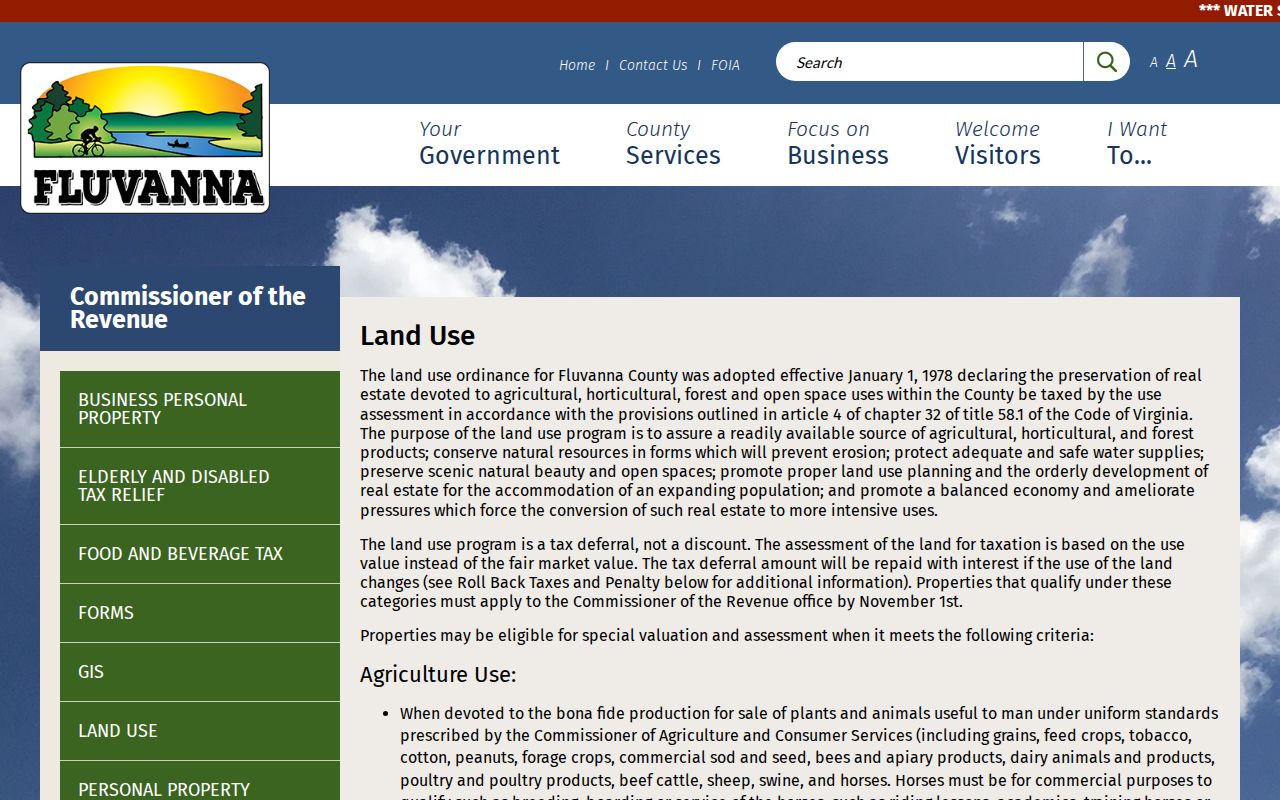
The Commissioner can confirm whether a parcel qualifies today.
Fluvanna Relief Changes Taxable Value
The Commissioner of the Revenue administers elderly and disabled tax relief, veterans tax relief, and land use. Relief can change the taxable amount. The deed's owner stays the same. So does the GIS boundary. Eligibility rules, current forms, and relief amounts come directly from the Commissioner rather than any summary.
When comparing assessed amounts, watch for a relief or land-use flag in the live record. A reduction is not a new appraisal. If the assessment itself seems wrong, the county's Board of Equalization notice gives complaint grounds. A bill question goes to the Treasurer. An exemption question goes to the Commissioner.
Fluvanna Sale Price and Assessment
A deed is the paper that proves a transfer. It may state the sale amount, or it may not. The county assessment card in Fluvanna does not display a last sale price. Neither does the public ACT DataScout view. The assessed value is not a price. Neither is a tax bill or a map layer. When the transaction figure matters, pull the recorded deed through the Clerk's index. Then read the filed instrument itself.
Fluvanna's land records reach back to the county's start in 1777. Remote images require a paid subscription, though. The online index is unofficial. The courthouse holds the official record. A historic sale price is also just one sale at one moment. It is not a current market appraisal. Before trusting a figure, confirm the deed describes the same parcel. That matters especially if the land was later divided or replatted. The Clerk's Secure Remote Access page lays out the land-record route in detail.
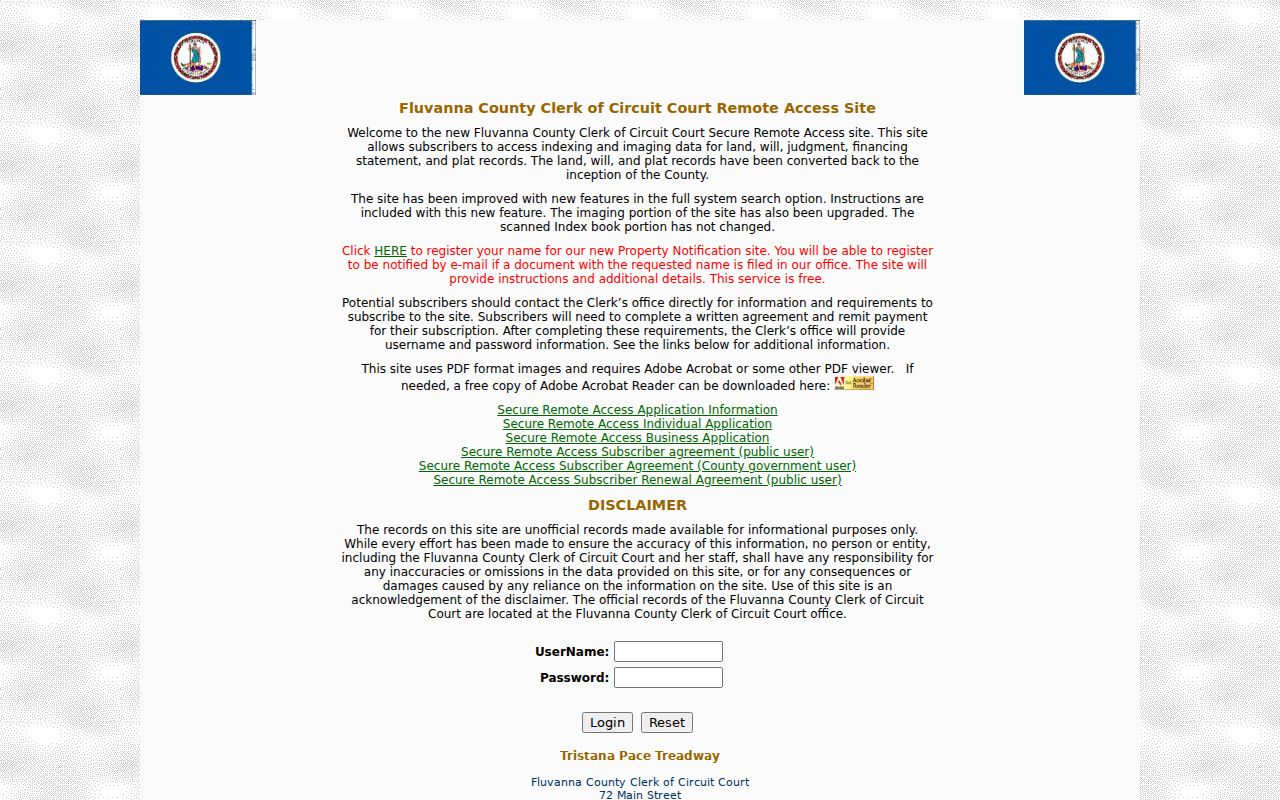
The image shows the SRA entry point only. It does not show a sale-price result or a deed consideration field.
Fluvanna Assessment Access Route
The county Commissioner page links to ACT DataScout, and the office itself keeps ownership and assessment data. Search by address or parcel key. Verify the legal description, and note the date and values shown. If a key field is missing, call 434-591-1940 and ask whether the office can confirm the assessment entry or explain how to request a copy. Use the Fluvanna Commissioner assessment page as the portal entry. When an address is unknown or returns several matches, identify the parcel through the Fluvanna property search before comparing values.
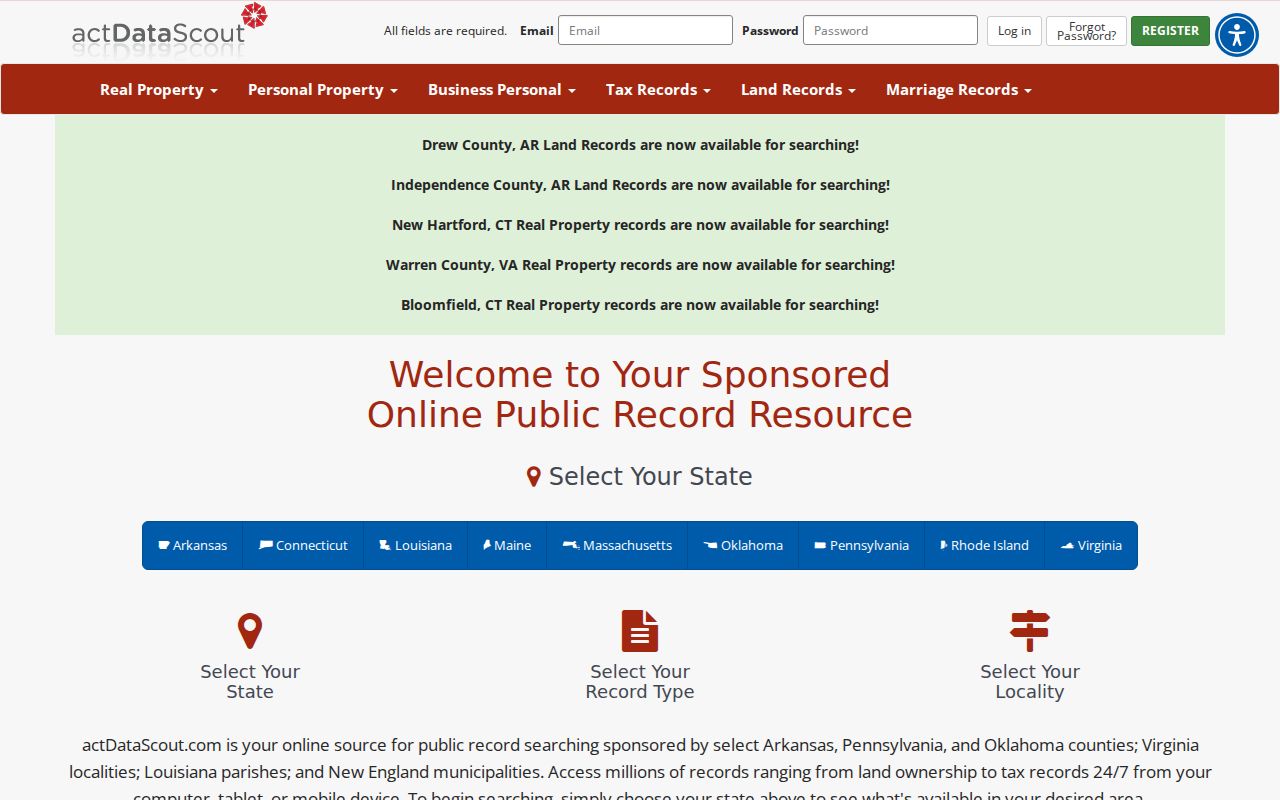
The image shows the county-linked portal route, not the value fields on a parcel card.
Keep the assessment year and parcel description next to any value you review. Fluvanna's roll can include land-use treatment, and the Commissioner also administers tax-relief programs. Those entries may change the tax amount without reflecting what a buyer would pay. A nearby parcel on the map is not automatically a good comparison either. Program status, acreage, improvements, and location can all differ.
If an amount looks off, confirm the result belongs to the right tax-map number and the year in question. The county's 2025 procurement describes a review of property and sales since January 1, 2025. A full review is planned from January 1, 2027. An option exists for another in 2029. Timing is a plan, though. Individual values still depend on how the county reviews each parcel.
The Board of Equalization notice lists inequality, acreage error, or a value above fair market value among possible complaint grounds. Gather the assessment record, parcel key, comparison information, and any relevant plat before raising an appeal. The county's June 2025 notice carries dated contact details. So check the current county page for the operative process. A map or assessment lookup can frame the question. Only the Board can decide a formal appeal.